
"Kenyan auction system"
500 article(s) found
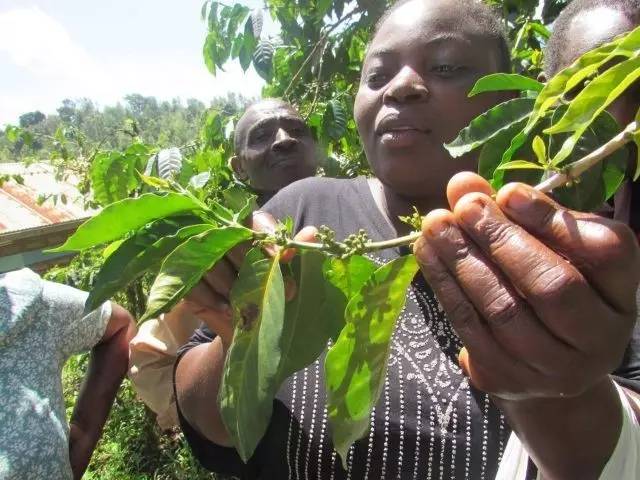
Flavor roasting and production of Kenyan coffee beans
Following Cafe Review (Wechat official account vdailycom) found that Beautiful Caf é opened a small shop of its own. Almost all boutique cafes serve Kenyan coffee, and almost all boutique coffee roasters roast Kenyan coffee, which is famous all over the world. Why is that? We need to know more about Kenyan coffee. Kenyan coffee flavor complex / complexity

Test report on washing Kenya AA+ Barawe berry coffee cup _ how to rinse Balawei berry coffee beans
Professional coffee knowledge exchange more coffee bean information please follow the coffee workshop (Wechat official account cafe_style) Kenya Coffee-Mount Kirinaga Kenya Kirinyaga [treatment] Water washing Full-Washed [roasting] shallow roasting Light Roast [beans] SL28, SL34 [Origin] Mount Kirinaga Kenya Kenya Kirinyaga [Cooperative] B

A brief introduction to the market price of glossy Kenyan boutique coffee beans
Coffee cultivation in Kenya is mainly divided into two types: large farms (Estate) and cooperatives (Cooperatives). The former generally has a large planting area and has independent coffee processing facilities. Most coffee production is done by a large number of small farmers, who form coffee cooperatives. The Coffee Cooperative Society hired special managers to supervise the coffee handling of its members.

A brief introduction to the cultivation of delicious Kenyan boutique coffee beans, geographical location, climate and altitude
Like the choice of other coffee producing countries, although SL-28 and SL-34 have stood the test of time and cultivated generation after generation of faithful pumps for Kenyan coffee, the Kenyan government and the Coffee Research Institute (Coffee Research Foundation) have begun to promote a new variety, Ruiri 11, for the sake of coffee yield and disease resistance.

A brief introduction to the flavor and aroma characteristics of Kenyan boutique coffee beans
Coffee cultivation in Kenya is mainly divided into two types: large farms (Estate) and cooperatives (Cooperatives). The former generally has a large planting area and has independent coffee processing facilities. Most coffee production is done by a large number of small farmers, who form coffee cooperatives. The Coffee Cooperative Society hired special managers to supervise the coffee handling of its members.

Brief introduction of coffee producing countries: Kenya
Kenyan coffee, known as the Cup of connoisseurs (Connoisseurs Cup), is famous in the coffee industry for its rich aroma, bright and vibrant acidity, full and elegant mellowness and red wine flavor. Caffeine in different producing areas has its own subtle flavor due to the difference of microclimate. Although the history of coffee in Kenya is adjacent to Ethiopia, the birthplace of coffee, coffee is grown.
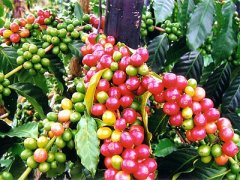
Introduction of boutique coffee beans-- African Kenyan coffee beans Kenyan coffee characteristics Kenyan coffee
African Kenyan coffee Kenyan coffee is mostly grown at an altitude of 15002100 meters and is harvested twice a year. Its main feature is a distinct fruit aroma, the common fruit aroma is citrus. Kenyan coffee has a multi-layered taste and juice acidity, perfect grapefruit and wine flavor, moderate mellow, is the favorite of many people in the coffee industry. Ken

The classification of Kenyan coffee raw beans there are differences in flavor between Kenyan coffee varieties, garden beans and flat beans.
Professional coffee knowledge exchange more coffee bean information please follow the coffee workshop (Wechat official account cafe_style) the classification of raw coffee beans in Kenya? What are the coffee producing areas in Kenya? How do Kenyan beans taste sour? Kenya, located in East Africa, is one of the major coffee producing countries. More than 6 million people in the country are engaged in the coffee industry, mostly small farmers.

A brief introduction to the description of flavor and aroma characteristics of glossy Kenyan boutique coffee beans
Compared with shading planting in many high-quality producing areas, Kenyan coffee is obviously more spicy and unrestrained, and shade trees are not common. In addition, Kenyan coffee rarely participates in certification, variety and environmental factors make the use of pesticides necessary, and organic certification, which is popular in other countries, becomes rare in Kenya. Kenya coffee harvest season there are two harvest seasons in Kenya, the main harvest

A brief introduction to the treatment method of grinding degree and baking degree of glossy Kenyan boutique coffee beans
Bourbon Bourbon was first brought to Kenya for planting. In the 1950s, the then agricultural research institution Scott Laboratory selected two excellent hybrids, SL-28 and SL-34, through unremitting efforts, subverting the long-standing prejudice of artificial breeding without excellent natural varieties. SL-28 and SL-34 helped Kenyan Coffee form its own unique

Kenyan coffee beans introduce the characteristics of Kenyan coffee beans Kenyan coffee bean flavor
Kenya AA, round beans, thick flesh, good heat permeability, high precision, French baking, rich and sweet taste, mellow thickness, good expansibility, aroma and sweetness are top grade. People in the coffee industry all think that Kenyan coffee is one of its favorite products because Kenyan coffee contains every feeling we want from a good cup of coffee. It has

A brief introduction to the market price of spicy and unrestrained Kenyan boutique coffee beans
Large coffee processing farms in Kenya usually have independent processing facilities. A large number of small farmers usually pick ripe coffee fruits by hand. Coffee picking is a labor-intensive job that requires the whole family to deploy and even hire workers during the harvest season. The fresh fruits of the picked coffee need to be promptly transported to the cooperative-owned coffee processing plant for pulping and transportation.

Kenyan Coffee output Kenyan Coffee extraction parameters how Kenyan Coffee flushes out berry flavor
Professional coffee knowledge exchange more information about coffee beans Please follow the coffee workshop (Wechat official account cafe_style) in 1893, John Patterson, a Scottish missionary, introduced coffee to Kenya. It is reported that the coffee seed was obtained from Smith Mackenzie, an agent of the British East India Company in the Yemeni port city of Aden. And then in Kibwezi near Mombasa, Kenya.

Introduction of Kenyan Coffee introduction of the origin of fine coffee beans
Kenyan coffee is mostly grown at an altitude of 1500m, 2100m, and is harvested twice a year. Its main feature is a distinct fruit aroma, the common fruit aroma is citrus. Kenyan coffee has a multi-layered taste and juice acidity, perfect grapefruit and wine flavor, moderate mellow, is the favorite of many people in the coffee industry. Kenya Coffee borrows Hollywood movies

Classification of Kenyan Coffee whether Jinchu Valley in Kenya is a manor or a producing area
Kenya is bordered to the north by Ethiopia, the origin of Arabica coffee trees, but it was not until the beginning of the 20th century that coffee cultivation began. In the 19th century, missionaries introduced Arabica trees from the leaves, but did not plant them in large quantities. It was not until 1893 that coffee was cultivated on a large scale because of the introduction of Brazil's ancient bourbon seeds. That is to say, Kenyan coffee is of Brazilian origin, because of water.

A brief introduction to the Origin, Development, History and Culture of Fruit-flavored Kenyan Fine Coffee beans
Mainly by large farms (Estate) and cooperatives (Cooperatives) two types. The former generally has a large planting area and has independent coffee processing facilities. Most coffee production is done by a large number of small farmers, who form coffee cooperatives. The coffee cooperative society employs special managers to supervise the coffee handling process of its members, even fine enough.

A brief introduction to the treatment method of grinding degree and baking degree of fruit-flavored Kenyan fine coffee beans
Bourbon Bourbon was first brought to Kenya for planting. In the 1950s, the then agricultural research institution Scott Laboratory selected two excellent hybrids, SL-28 and SL-34, through unremitting efforts, subverting the long-standing prejudice of artificial breeding without excellent natural varieties. SL-28 and SL-34 helped Kenyan Coffee form its own unique

Fruit Flavor Kenya Fine Coffee Bean Growing Location Climate Elevation Profile
Bourbon Bourbon was first brought to Kenya for cultivation. In the 1950s, Scott Laboratory, an agricultural research institution at that time, made unremitting efforts to select two excellent hybrids SL-28 and SL-34, overturning the long-standing bias that artificial breeding varieties were not excellent in natural varieties. SL-28 and SL-34 helped Kenyan coffee become unique
Characteristics of boutique Kenyan coffee beans how much is Kenyan coffee beans per jin
Kenya AA, round beans, thick flesh, good heat permeability, high precision, French baking, rich and sweet taste, mellow thickness, good expansibility, aroma and sweetness are top grade. People in the coffee industry all think that Kenyan coffee is one of its favorite products because Kenyan coffee contains every feeling we want from a good cup of coffee. It has

A brief introduction to the Market Price of Fine Coffee Bean varieties in Kenya
Like the choice of other coffee producing countries, although SL-28 and SL-34 have stood the test of time and cultivated generation after generation of faithful pumps for Kenyan coffee, the Kenyan government and the Coffee Research Institute (Coffee Research Foundation) have begun to promote a new variety, Ruiri 11, for the sake of coffee yield and disease resistance.